
““You build inner strength through embracing the totality of your experience, both the delightful parts and the difficult parts.””
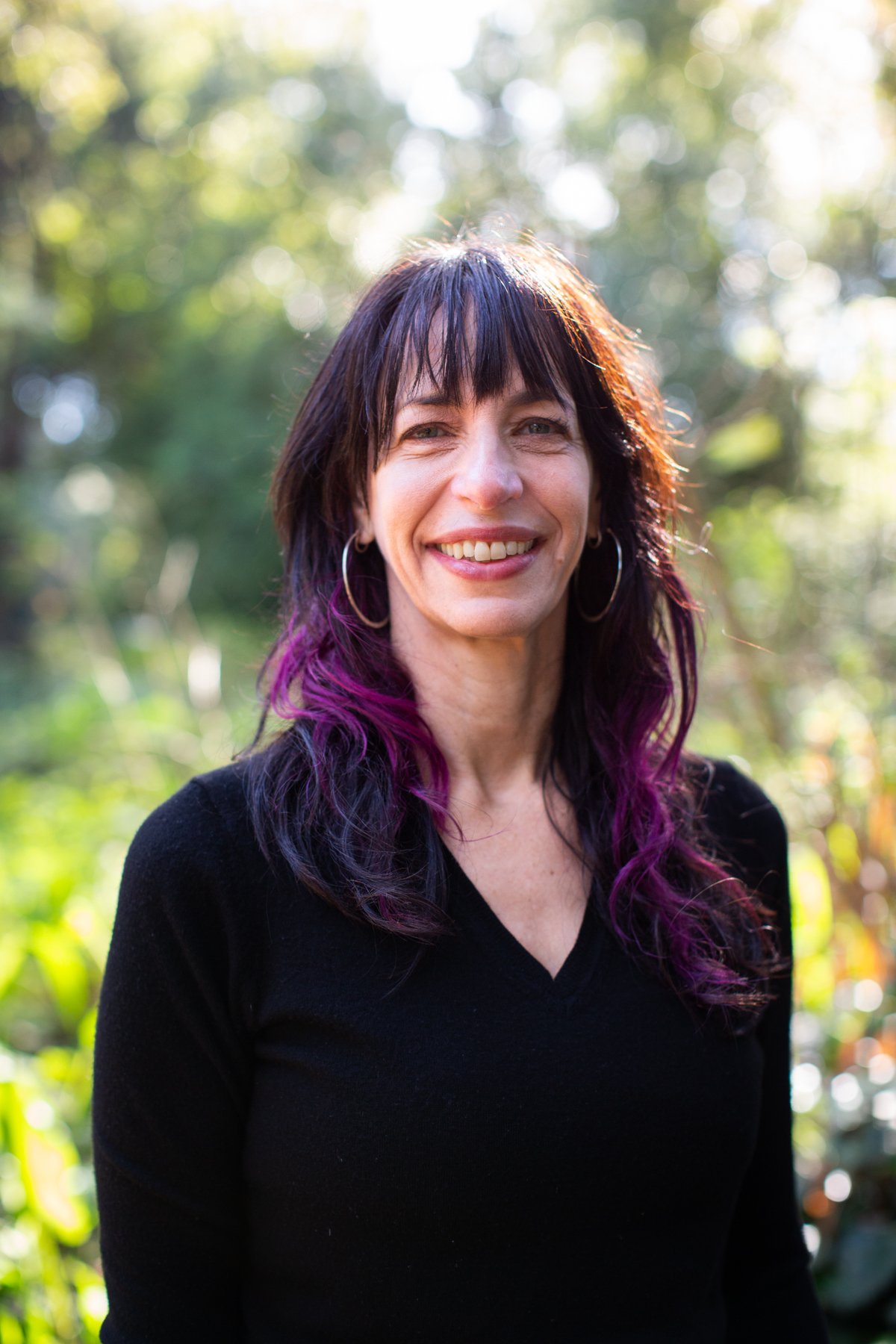
About me: I am a licensed psychotherapist (LMFT) and provide individual and family support as well as professional consultation to therapists. I’m real, engaged, transparent, warm and collaborative. I live and work on the unceded ancestral lands of the Ohlone, Ramaytush and Muwekma peoples (formerly called Welamu, now commonly “San Francisco”).
Identities: I am a white, queer, pansexual, able-bodied, cis gendered female she/her. Relationally, I identify as polyamorous. I am an educator and humble learner. I am a seeker and student of healing wisdom and practices. Other identities: sister/artist/spiritually oriented (non sectarian).
Cultural Disclosure: I recognize that my white, cisgender and straight passing, native English speaking, able and thin-body privileges have allowed me to access opportunities centered to white English speakers including higher education. I recognize inequity and systems of oppression and I strive to hold myself accountable to the dismantling of oppressive systems, particularly in health care spaces.
Therapeutic Approach:
I approach therapy from the perspective of both experiential, and evidence based cognitive models. I believe that a process of change occurs when we can truly be ourselves with our core vulnerabilities and be witnessed and helped by a compassionate other. Therapy involves an initial intake to capture a deeper understanding of your familial, societal and cultural context. We will work together to identify the problem you are seeking my help with. We then collaborate on a direction/plan that will support the outcomes you are seeking for yourself. My work is customized to address your specific concerns which can include a combination of process and skill building. I am dedicated and passionate about healing and growth and work with individuals who feel ready to take a “next step” in their wellness.
Somatic and Experiential work: I provide therapy that is Somatic and Experiential. What do I mean by “Experiential?” I am referring to a process of attending to your felt experience and emotions in the present moment, in your body. There are many ways we are discouraged from being with our moment-to-moment experience. This idea can be confusing. What does it mean to “be in my body?” Perhaps you have felt something in your gut. Maybe witnessed a work of art that moved you and created a sensation of warmth you associate with grief. Maybe you were not aware of feeling mixed emotions until you slowed down and felt pressure in your chest. These are just a few everyday examples of how we experience our emotions in our body and how our body can be a resource for self-understanding, relating to others authentically and processing our emotions. In psychotherapy work we can explore your truth as it exists in patterns of holding, yielding, freeze responses and more. Somatic work can help you regulate anxiety and uncover emotional content that may feel harder to access through cognitive methods. Somatic body based methods also can accelerate emotional processing.
Relational therapy: I offer a relational orientation to therapy, which means I help facillitate and co-create, new preferred relationship experiences in the therapy to support healthy attachment and address issues of trauma, suffering, loss, and ruptured/damaged attachments. I believe that a positive therapeutic relationship has the potential to offer an opportunity to practice new (or historically feared) relationship growth tasks, such as sharing/being vulnerable about your feelings and thoughts that previously weren’t safe to share or feel with others. In relational therapy I play a more active role in noticing relationship patterns with you as they arise in the room. Working together, we can compassionately understand these patterns and make courageous shifts that lead to deeper intimacy and relational changes in your life.
Sex positive affirming care: I affirm and specialize in sexual diversity. I am a “sex positive” therapist which I describe to mean accepting and celebrating a diversity of sexual expressions, relationship structures and individual choices based on consent. I see being sex positive as an affirming stance that sexuality is a natural, healthy and vital part of the human experience which can be expressed in a multitude of complex ways and affirm personal identity, lived experience, creativity and growth.
Being sex positive in my mind isn’t about having more sex or less, whether you are highly sexual or asexual, it’s about cultivating a sexuality that is reflective of who you are and making your sexuality work for you. Being sex positive also means to me, acknowledging the shame and stigma perpetuated by external societal discourses about sex and sexuality that have real consequences on social, family and work relationships, as well as self-esteem and overall sense of wellbeing. It’s important to me to create a safe space where clients can rejoice in who they are and feel empowered to choose the types of relationships and sexuality they feel align with their wholeness.
Psychosis spectrum specialized care: I am considered a “local expert” in working with psychosis. I have worked with the UCSF Path program for 10 years and other community based programs providing collaborative care. Visons, auditory or tactile hallucinations, felt presences, paranoia and other perceptual shifts or changes can be hard to make sense/meaning of especially in a neurotypical world. Sometimes it can be hard to stay on track with your life when handling diverse experiential input. I both honor and value your “reality” and ways of understanding your experiences.
I also provide support to help with reducing intense fear and support you to expand your ability to feel “safe enough” to inhabit your environment. I am trained in evidence based approaches for psychosis spectrum experiences such as: CBTp, DBT informed therapy for psychosis, Compassion Focused Therapy, Feeling Safe program, EMDR for psychosis. I have training in Voice Dialogue (both Rufus May and Eleanor Longden approach). Art and writing are also important chanels for exploration and expression. Additionally, I integrate and offer peer led resources such as psychosis outside of the box to clients because I believe building community is integral to healing. I provide a space space for neurodivergence as we co-create together a path towards hope, pursuit of your life goals and compasionately making sense of your experiences in your preferred ways.